
If you’re thinking about filing for Chapter 7 bankruptcy Florida, you probably want the short answer first. In most no-asset cases, this liquidation bankruptcy process, designed to provide a fresh start, usually takes about 3 to 6 months from filing to final closure in 2026.
The big catch is that two dates matter, not one. Many people get their discharge, which helps them discharge debts like unsecured debt such as credit card debt or high medical bills, before the court formally closes the case. Also, timelines can shift based on your facts, the trustee, and the Florida district where the case is filed.
The usual Chapter 7 timeline in Florida
For a typical no-asset case, Chapter 7 moves faster than many people expect. Think of it like a short train route with a few fixed stops. Once you file, the automatic stay usually starts right away, which can stop most collection actions, lawsuits, and wage garnishments.
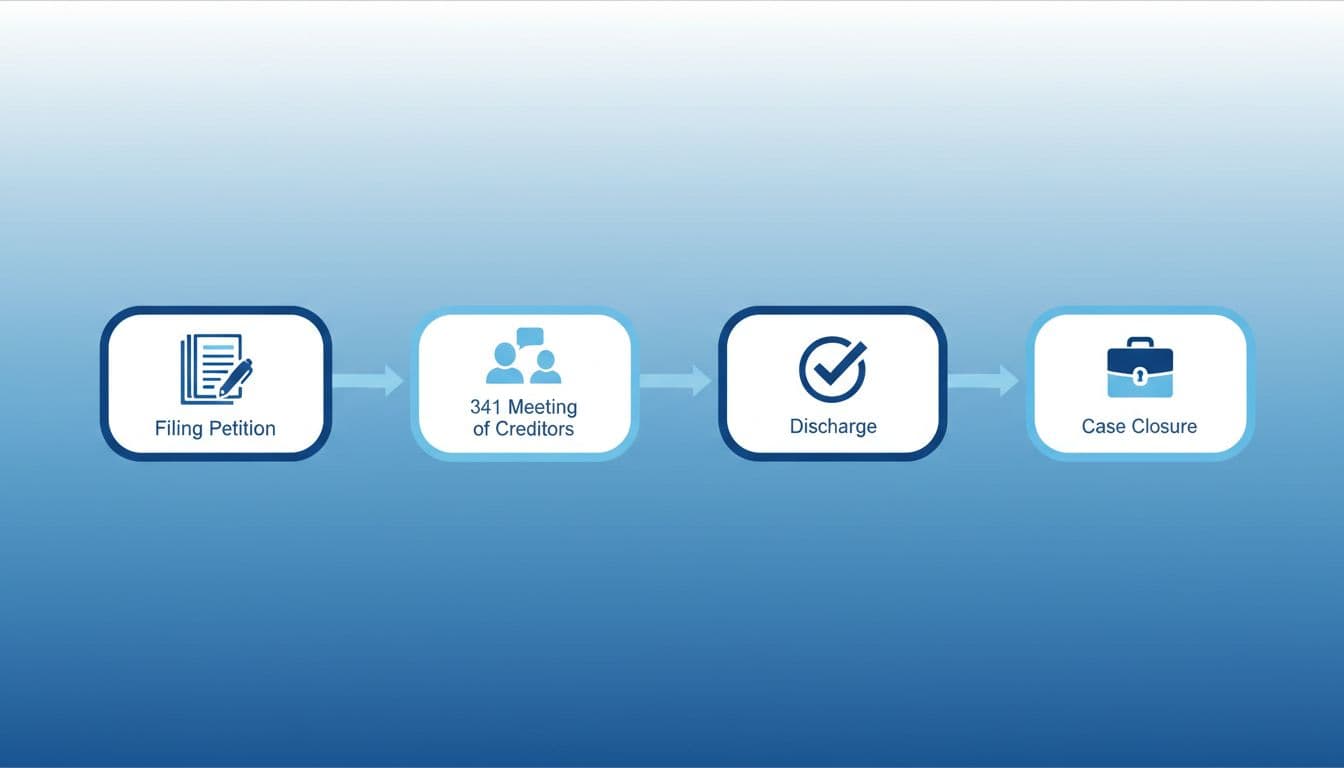
Once you’ve completed the required credit counseling course and your paperwork is complete with no fights over assets or debts, the timeline often looks like this:
| Stage | Rough timing | What happens |
|---|---|---|
| Filing date | Day 1 | Filing the bankruptcy petition and paying the filing fee starts the case; automatic stay usually begins |
| Meeting of creditors | About 20 to 40 days after filing | Bankruptcy trustee asks basic questions under oath |
| Objection period | About 60 days after the meeting of creditors | Creditors or trustee can object |
| Discharge | Usually 60 to 90 days after the meeting of creditors | Many dischargeable debts are wiped out |
| Final closure | Often 3 to 6 months from filing | Court closes the case |
That general range lines up with Upsolve’s Chapter 7 timeline overview and this Florida Chapter 7 process flowchart. Florida’s Middle, Northern, and Southern Districts all follow the same federal framework, so the big milestones are similar statewide. This process is also much quicker than chapter 13 bankruptcy, which requires a repayment plan over several years.
Still, good prep matters. Missing bank statements, tax returns, or pay stubs can slow things down before the case really gets moving. Consulting a bankruptcy lawyer to handle means test prep can help ensure everything goes smoothly. A solid Florida Chapter 7 bankruptcy checklist can help you gather what the court and trustee usually want.
Discharge comes first, closure comes later
In Chapter 7 bankruptcy Florida, this is where many people get confused. A discharge is the court order that wipes out personal liability on unsecured debt to discharge debts. Case closure is the bankruptcy court’s final administrative step. In a clean no-asset case, those two dates may land close together. In a more complicated case, they can be far apart.
A discharge order does not always mean the case is fully over.
Most no-asset filers in Florida get a discharge roughly 60 to 90 days after the 341 meeting. Since that meeting often happens 20 to 40 days after filing, discharge may arrive around the 3 to 4 month mark. Final closure often follows not long after.
Several things can stretch that timeline:
- Missing documents: the bankruptcy trustee may ask for tax returns, pay stubs, bank records, or proof of expenses.
- Financial management course not completed: if you miss the required post-filing course, the discharge can stall.
- Reaffirmation agreements: if you want to keep a car with secured debt, extra paperwork and court review may be needed.
- Objections: a bankruptcy trustee or creditor can object to discharge or claim an exempt property issue.
- Non-exempt assets: if the bankruptcy trustee may sell property, the case can stay open much longer.
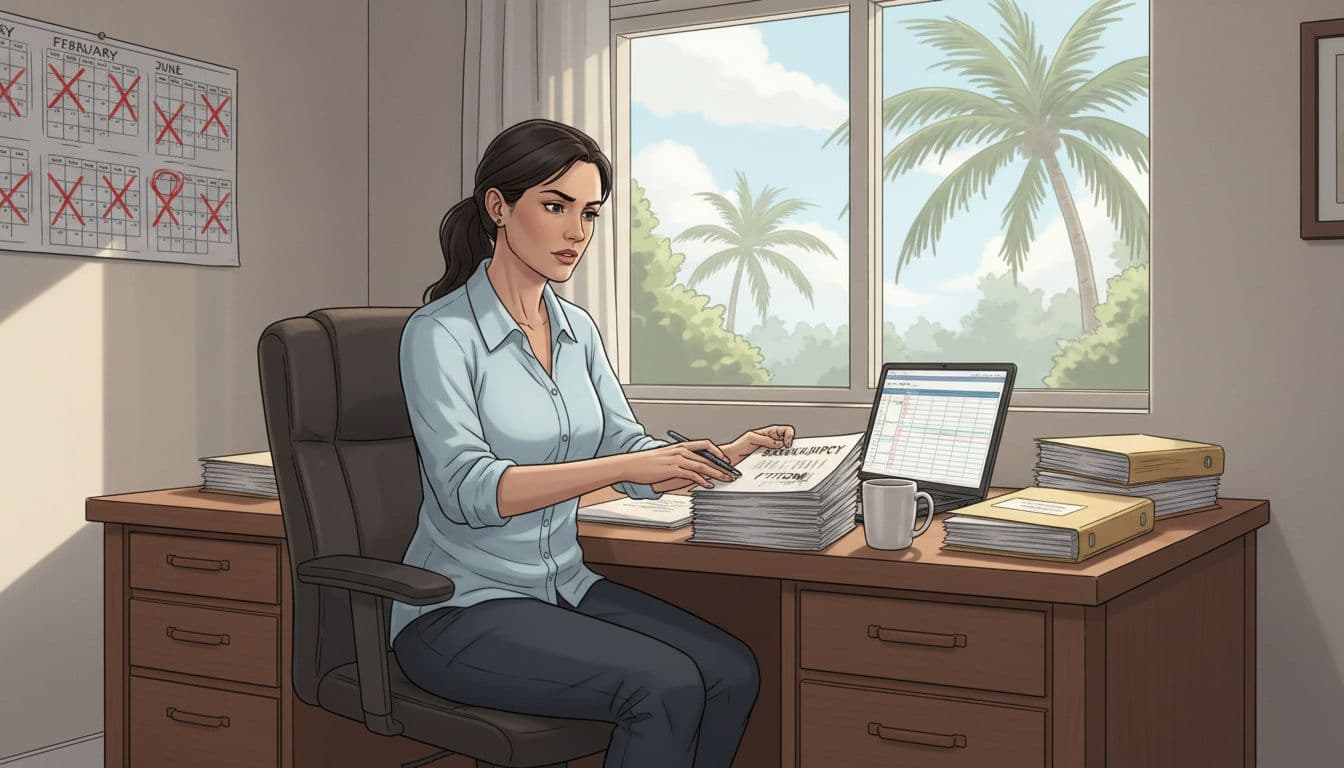
Asset cases are the clearest example. You might receive your discharge, but the bankruptcy trustee still needs time to review exempt property versus non-exempt assets, recover, or sell non-exempt assets and pay creditors. In that setting, the case can stay open for many months, and sometimes longer.
Reaffirmation agreements can also add time. If you’re keeping a financed car with secured debt, the lender may want a reaffirmation agreement filed before discharge. When that paperwork comes in late, the court may need more time to sort it out.
Florida details that can affect timing in 2026
Florida has three federal bankruptcy courts, and each has its own local practices. The same federal deadlines still drive the case, but scheduling, bankruptcy trustee preferences, and document issues can change the pace around the edges.

Florida-specific planning also matters before you file. If your household income is close to the Florida median income line, eligibility questions can slow the start because the means test has to be done correctly. The means test compares household income to the Florida median income to determine disposable income relative to state income limits. For married couples, filing a joint petition is common. For current numbers and a plain-English breakdown, review the Florida Chapter 7 means test income limits. If the means test points away from Chapter 7, chapter 13 bankruptcy may be the better fit after filing the bankruptcy petition, and that changes the timeline from months to years.
Property issues, such as foreclosure risks, can matter too. Florida has strong exemptions in many cases, especially for homestead, but not every asset is protected. The schedule of assets must be accurate so the bankruptcy trustee does not see possible nonexempt equity in a car, cash account, lawsuit claim, or other property, which could turn a quick no-asset case into something longer.
Current procedure still comes from federal bankruptcy law, the Federal Rules of Bankruptcy Procedure, and local court practice. So while 3 to 6 months is common, no lawyer can promise the exact date your case will close.
Final takeaway
For most Florida no-asset filers, Chapter 7 bankruptcy Florida is measured in months, not years. This process typically eliminates unsecured debt like medical bills and credit card debt. A common path is filing, a 341 meeting about a month later, discharge a couple of months after that, and closure soon after.
Still, delays happen when paperwork is missing, objections arise, reaffirmation issues come up, or nonexempt assets are involved. This article is general information, not legal advice. If you’re dealing with a debt lawsuit, garnishment, or aggressive collection actions, contact a bankruptcy lawyer for advice based on your exact facts and court district.